Pool Replacement Filter Explained: A UK Buyer's Guide
Maintaining pristine water in a garden pool or inflatable spa requires more than simply balancing chemicals; it demands a highly efficient filtration system. At the heart of this system sits the pool replacement filter, a crucial component responsible for trapping micro-debris, body oils, and environmental contaminants before they can cloud your water or damage your pump. For UK homeowners investing in outdoor leisure—particularly inflatable models like the Bestway Flowclear—understanding the mechanics of your filtration system is the difference between crystal-clear water and a murky, unhygienic headache.
With the British summer often prompting heavy, concentrated use of garden pools, the strain on a standard filter cartridge is immense. Combined with the UK's varying water hardness levels and strict health and safety guidelines regarding waterborne pathogens, choosing and maintaining the correct pool replacement filter is a non-negotiable aspect of spa ownership.
Key Takeaways
- Health & Safety: A high-quality pool replacement filter is your first line of defence against waterborne bacteria, aligning with HSE guidelines for domestic water hygiene.
- UK Water Hardness: Over 60% of the UK has hard water, which calcifies filters faster, requiring a strict 2-week replacement schedule.
- Cost Efficiency: Running a clogged filter strains your pump, increasing energy consumption and risking costly mechanical failures.
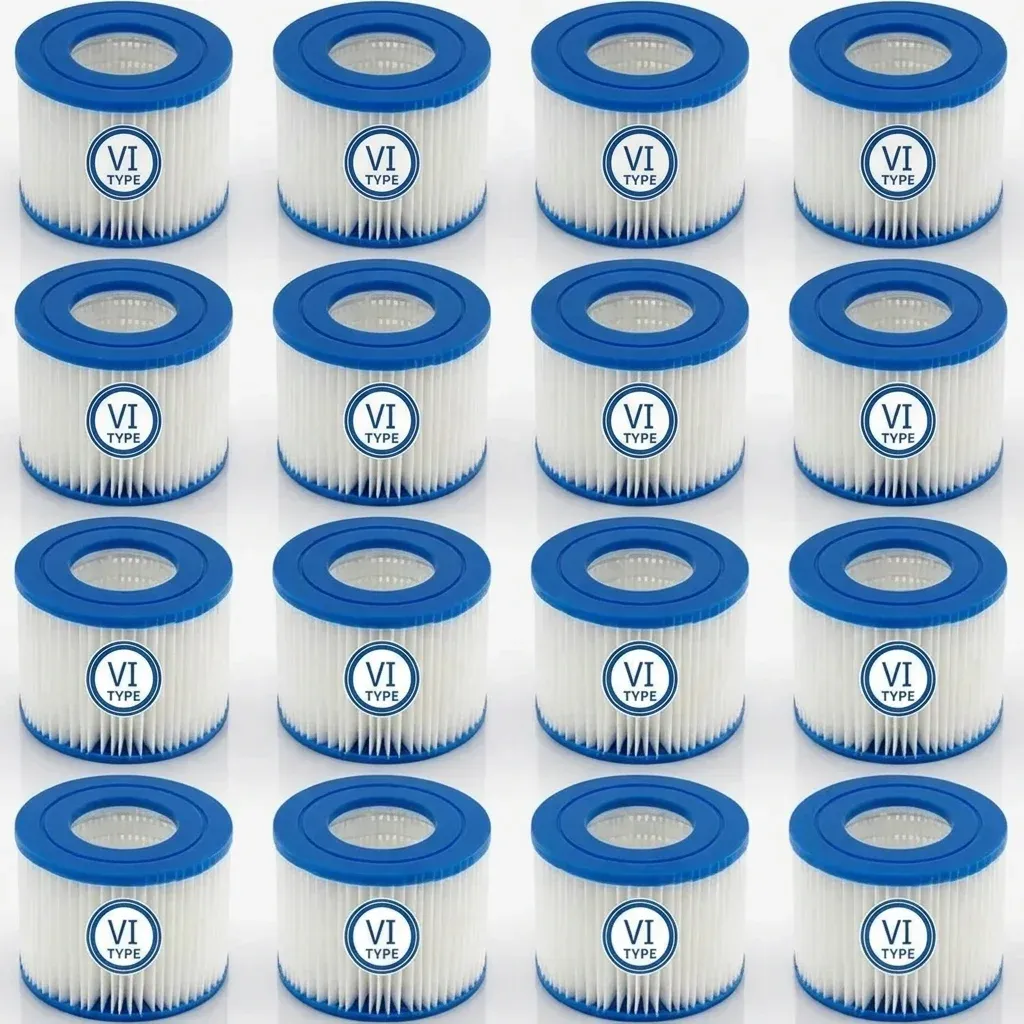
- The Optimal Choice: For Bestway Flowclear and similar inflatable spas, a Type VI Pool Filter 16-Pack offers the most reliable, cost-effective maintenance strategy.
The Critical Role of a Pool Replacement Filter
Every time you step into your pool or spa, contaminants enter the water. Sunscreen, natural skin oils, hair products, and airborne garden debris (such as pollen and leaves) immediately begin to degrade the water quality. The pump draws this contaminated water through the pool replacement filter, where specialised pleated fabric traps particles as small as 20 to 40 microns—far smaller than the human eye can see.
In the UK, where the Health and Safety Executive (HSE) and the NHS frequently highlight the risks of bacteria such as Pseudomonas aeruginosa and Legionella in poorly maintained warm water systems, filtration is a matter of health, not just aesthetics. Stagnant, unfiltered water becomes a breeding ground for these pathogens. Sanitising chemicals like chlorine or bromine can only do their job effectively if the physical debris is first removed by a robust pool replacement filter. If the filter is saturated, chemicals bind to the waste rather than attacking harmful bacteria.
Anatomy of a High-Quality Filter Cartridge
Not all filters are manufactured to the same standard. When sourcing a pool replacement filter, it is essential to understand the structural components that dictate its efficiency and lifespan.
Trilobal Filtration Fabric
Premium filters utilise advanced spunbond polyester, often woven into a trilobal structure. Unlike standard cylindrical fibres, trilobal fibres have a multi-lobed cross-section. This significantly increases the surface area of the fabric without increasing the physical footprint of the cartridge, allowing it to capture a higher volume of microscopic particulate matter before restricting water flow.
Optimised Pleat Count
The folds in the fabric, known as pleats, are engineered to maximise the filtration area. However, more pleats do not automatically equate to a better pool replacement filter. If pleats are packed too tightly, water cannot flow freely between them, leading to a phenomenon known as "channelling," where water bypasses the filtration media entirely. A well-engineered spa filter cartridge strikes the perfect balance between pleat count and spacing to maintain optimal hydrostatic pressure.
Reinforced Inner Core
The central core of the filter must withstand constant suction from the pump. High-quality replacements feature a reinforced, high-flow ABS plastic core. Cheaper alternatives often use flimsy plastic that can collapse under the pressure of a high-speed pump, instantly rendering the filtration system useless and potentially sending plastic fragments into the pump impeller.
Why the Type VI Filter is the UK Standard for Inflatable Spas
For the vast majority of UK garden pool owners, particularly those utilising Bestway Flowclear systems and Lay-Z-Spa models, the Type VI cartridge is the undisputed standard. Its compact dimensions (typically 106mm in diameter and 80mm in height) are specifically designed to fit snugly into the housing of these popular inflatable units.
At VI Replacem, our hero product is the Type VI Pool Filter 16-Pack for Easy Spa Maintenance. We specifically engineered these compatible Type VI replacements for Bestway Flowclear pools and inflatable spas to meet the rigorous demands of British pool owners. Buying in bulk not only reduces the per-unit cost but also ensures you are never caught without a fresh filter during peak summer usage.
For an exhaustive breakdown of why this specific size and specification dominates the market, we highly recommend reading our comprehensive guide to the Bestway VI filter in the UK, which details compatibility metrics and performance data.
The Impact of UK Hard Water on Your Pool Replacement Filter
One of the most overlooked factors in UK pool maintenance is water hardness. The geological makeup of Great Britain means that water quality varies drastically from region to region, which has a direct, profound impact on the lifespan of your filter.
Data Point: According to the Drinking Water Inspectorate (DWI) and regional suppliers like Thames Water, over 60% of households in England and Wales are situated in hard water areas, with water containing high concentrations of calcium and magnesium compounds (often exceeding 200mg of calcium carbonate per litre).
When hard water is heated in a spa or pool, calcium carbonate precipitates out of the water and forms limescale. This scale rapidly coats the polyester pleats of your pool replacement filter. Once calcified, the microscopic pores in the fabric become permanently blocked. Rinsing with a standard garden hose will not remove calcium scale; it requires dedicated chemical filter cleaners. However, even with regular cleaning, a calcified filter will never return to its original efficiency, making a strict replacement schedule vital.
When and How to Change Your Filter Cartridge
A common misconception among new pool owners is that a single filter will last an entire season. In reality, adhering to a strict maintenance and replacement schedule is the only way to ensure safe water and protect your hardware.
The Cleaning vs. Replacing Schedule
- Every 2 to 3 Days (Cleaning): Remove the pool replacement filter from its housing and rinse it thoroughly with a garden hose. Use a moderate spray setting to dislodge larger debris from between the pleats. Do not use a high-pressure washer, as this will tear the spunbond polyester.
- Every 2 Weeks (Replacing): Regardless of how meticulously you clean it, the microscopic pores of the fabric will eventually saturate with body oils, biofilm, and calcium. After two weeks of regular use, the filter must be discarded and replaced. This is why investing in a 16-pack is the most logical approach for a hassle-free season.
Step-by-Step Installation Guide
- Isolate the Power: Always turn off your pool pump at the mains before attempting to change the filter. This prevents the pump from running dry and protects you from electrical hazards.
- Block the Water Flow: If your pool requires it, insert the stopper caps into the inlet and outlet valves on the inside of the pool wall to prevent water from pouring out when you open the filter housing.
- Remove the Housing: Unscrew the top of the filter housing. Carefully lift out the saturated pool replacement filter. Inspect the housing for any trapped leaves or debris and wipe it clean.
- Insert the New Filter: Place your new Type VI compatible filter into the housing, ensuring it sits flush against the bottom gasket.
- Reassemble and Bleed Air: Secure the housing lid. Remove the stopper caps from the pool walls. Finally, open the air purge valve on the top of the pump (if applicable) until water begins to seep out, ensuring no airlocks are trapped in the system.
For those running higher-temperature setups, the principles remain the same, though the degradation of the fabric may occur slightly faster. You can explore this further in our dedicated hot tub filter cartridge resource.
The Hidden Costs of Poor Filtration
Attempting to stretch the lifespan of a pool replacement filter beyond its engineered limits is a false economy. The financial and mechanical repercussions far outweigh the cost of a new cartridge.
Increased Energy Consumption
With UK energy prices remaining a significant concern for households under the current Ofgem price cap, running an inefficient pool pump is an expense you want to avoid. When a filter is clogged with debris and scale, the water flow is restricted. The pump must work exponentially harder to pull water through the saturated fabric, drawing more electrical current in the process. A fresh, clean filter allows the pump to operate at its lowest engineered resistance, saving you money on your electricity bill.
Mechanical Failure and Pump Strain
If a pump is continuously forced to draw water through a blocked pool replacement filter, it can lead to cavitation—a phenomenon where the pressure drops so low that water boils at ambient temperatures, creating bubbles that implode and destroy the pump impeller. Furthermore, the motor will run hotter, drastically reducing its lifespan. Replacing a burnt-out pump unit on a Bestway Flowclear system is significantly more expensive than adhering to a two-week filter replacement routine.
Frequently Asked Questions
Can I wash my pool replacement filter in the washing machine or dishwasher?
No. This is a common but destructive practice. The aggressive detergents used in dishwashers will introduce foaming agents into your pool water, leading to severe chemical imbalances. The intense heat and mechanical agitation of a washing machine will destroy the delicate trilobal filtration fabric and warp the plastic core. Always rinse by hand with a hose.
How do I know if my filter needs replacing before the two-week mark?
If you notice your pool water becoming cloudy despite correct chemical balancing, or if your pump unit displays a 'flow error' code (common on Lay-Z-Spa models), your filter is likely saturated. Additionally, if the fabric appears permanently discoloured (brown or green) even after a thorough hosing, it is time to install a new pool replacement filter.
Are Type VI filters universally compatible?
Type VI filters are the specific standard for Bestway Flowclear pumps and Lay-Z-Spa inflatable hot tubs. While they may physically fit in some other generic brand housings, you must always verify the required dimensions (approx 106mm x 80mm). For absolute certainty, review our ultimate guide to the Bestway VI filter to cross-reference your specific pump model.
Does leaving the pool pump running 24/7 ruin the filter faster?
Running your pump continuously is excellent for water hygiene, but it does mean the filter is constantly trapping debris. While it won't "ruin" the filter, it will reach its maximum particulate capacity faster. In a 24/7 operation scenario, strictly adhering to a 2-week replacement cycle with a fresh pool replacement filter is absolutely critical.
Simplify Your Spa Maintenance Today
Don't let a clogged, inefficient filter ruin your garden leisure time or drive up your energy bills. Stocking up on reliable, high-quality cartridges is the single best investment you can make for your pool's longevity and your family's health.
Ensure crystal clear water all summer long with our Type VI Pool Filter 16-Pack for Easy Spa Maintenance. Perfectly engineered as compatible Type VI replacements for Bestway Flowclear pools and inflatable spas.
Ready to try VI Replacem?
Shop Now — £64.43